

At the Executive Panel: Sustainability as a Competitive Advantage, part of GRT 4.0 (Ho Chi Minh City, October 27, 2026), Mr. Dinh Hung Dung, Member of the Board of Directors in charge of Sustainability at ANTESCO, set out the company’s position: sustainability is how ANTESCO protects the foundation of its value creation, earns the trust of global customers and raises the quality of its long-term growth.
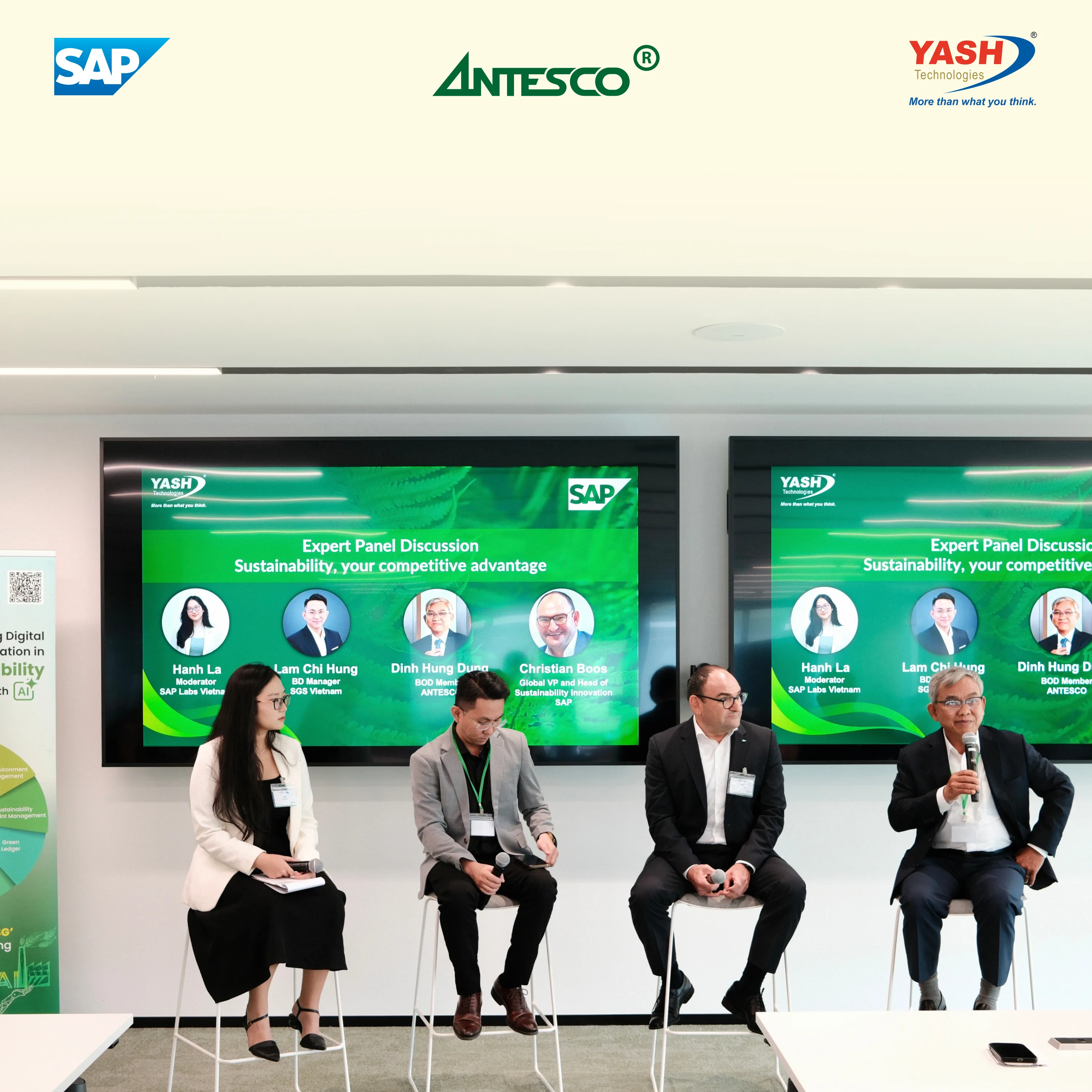
GRT 4.0: where sustainability is discussed as a business question
GRT 4.0 – The Enterprise Resilience & Transformation Tour is an EHS and sustainability roadshow organized by SAP and YASH Technologies across North America and Southeast Asia. It is the fourth edition of the program, following three earlier editions and a community of more than 500 sustainability, supply chain and SAP professionals. The Ho Chi Minh City stop took place on October 27, 2026 at SAP Vietnam, closing the 2026 schedule that also included Boston, Houston, Chicago, Bangkok, Singapore and Jakarta.
The program focuses on turning commitments into action: carbon accounting, emissions reduction, supply chain traceability and compliance with regulations such as EUDR and CSRD, supported by AI and SAP’s sustainability solutions.
Market context: from compliance to competitiveness
The expert panel brought together representatives of SGS, SAP and ANTESCO. SGS’s representative noted that sustainability is shifting from a regulatory requirement to a source of competitive advantage. Global regulations such as CSRD and CBAM, together with the expectations of international customers, are directly affecting Vietnamese supply chains. Carbon footprint, environmental performance and credible ESG data are increasingly relevant to customers.
From SAP, Mr. Christian Boos, Global VP & Head of Sustainability Innovation, said that meeting expectations on ESG performance, carbon transparency and compliance is not only a matter of regulation. It is what allows exporters to remain trusted business partners and stay competitive.
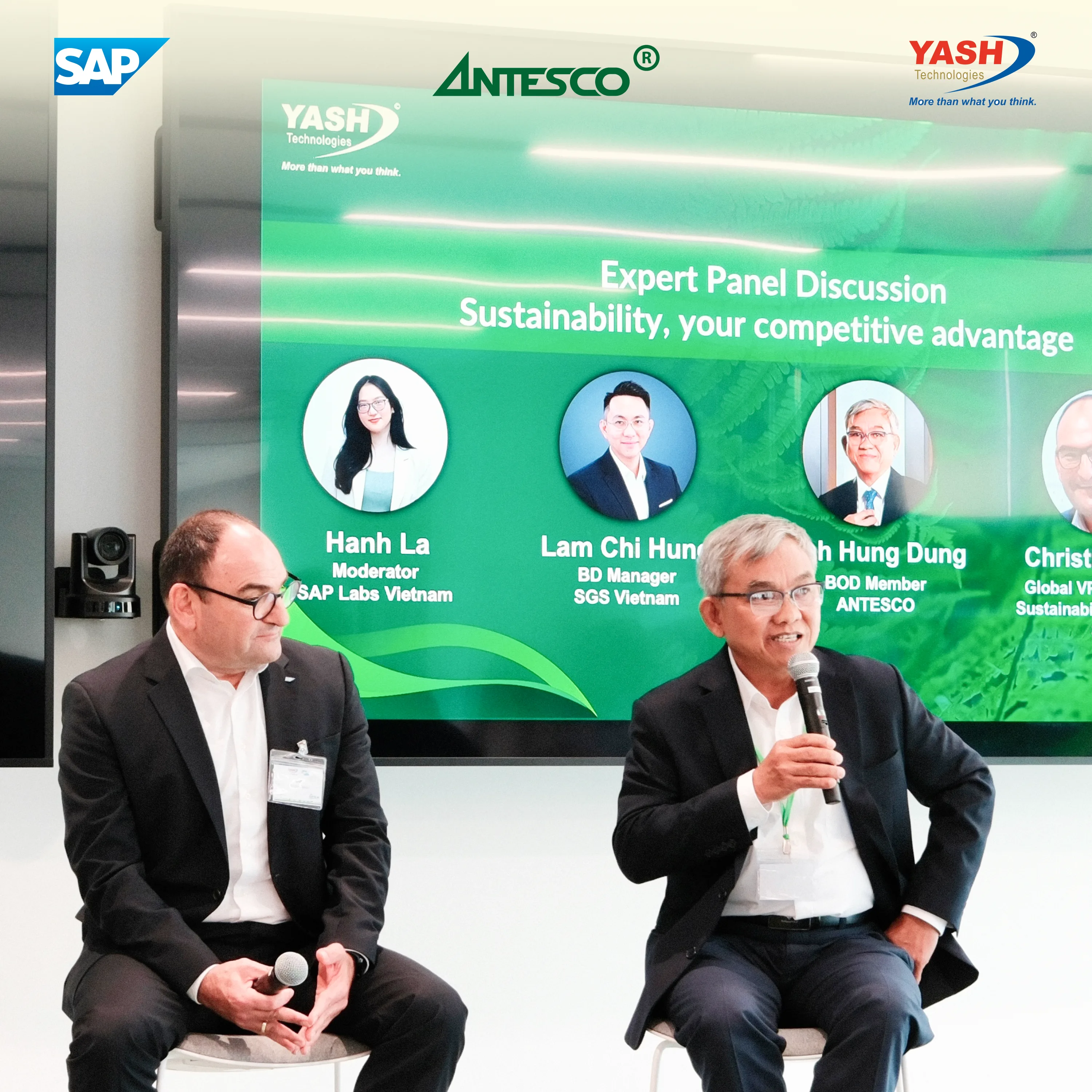
The voice of ANTESCO: sustainability starts in the growing region and is decided at the management table
Amid the discussion of global standards, Mr. Dinh Hung Dung offered the perspective of an agricultural processing and export company. In his view, ANTESCO’s core motivation goes beyond meeting the rising demands of export markets. It is a move from a compliance-first mindset to building competitive advantage and staying relevant to customers. Three drivers shape this path:
- A stable, sustainable supply of raw materials. Factory operations depend on the quality of growing areas and on farmers’ continued engagement. ANTESCO therefore works alongside farmers, promotes responsible farming practices and encourages the reasonable use of resources.
- Trust and long-term relationships with customers. In the food supply chain, trust is built on product safety, consistent quality, clear traceability and reliable information about production processes. ANTESCO wants customers to feel confident about what they buy, understand how it is made and plan their businesses with greater certainty.
- Operational efficiency and the quality of growth. Expansion goes together with more efficient use of electricity, water and raw materials, circular use of by-products, workforce development and transparent governance.
“Protecting growing areas and farmers’ livelihoods also means protecting the company’s production foundation.”
Mr. Dinh Hung Dung, Member of the Board of Directors in charge of Sustainability, ANTESCO
From these three drivers, ANTESCO draws a clear conclusion: sustainability must be integrated into everyday business decisions.
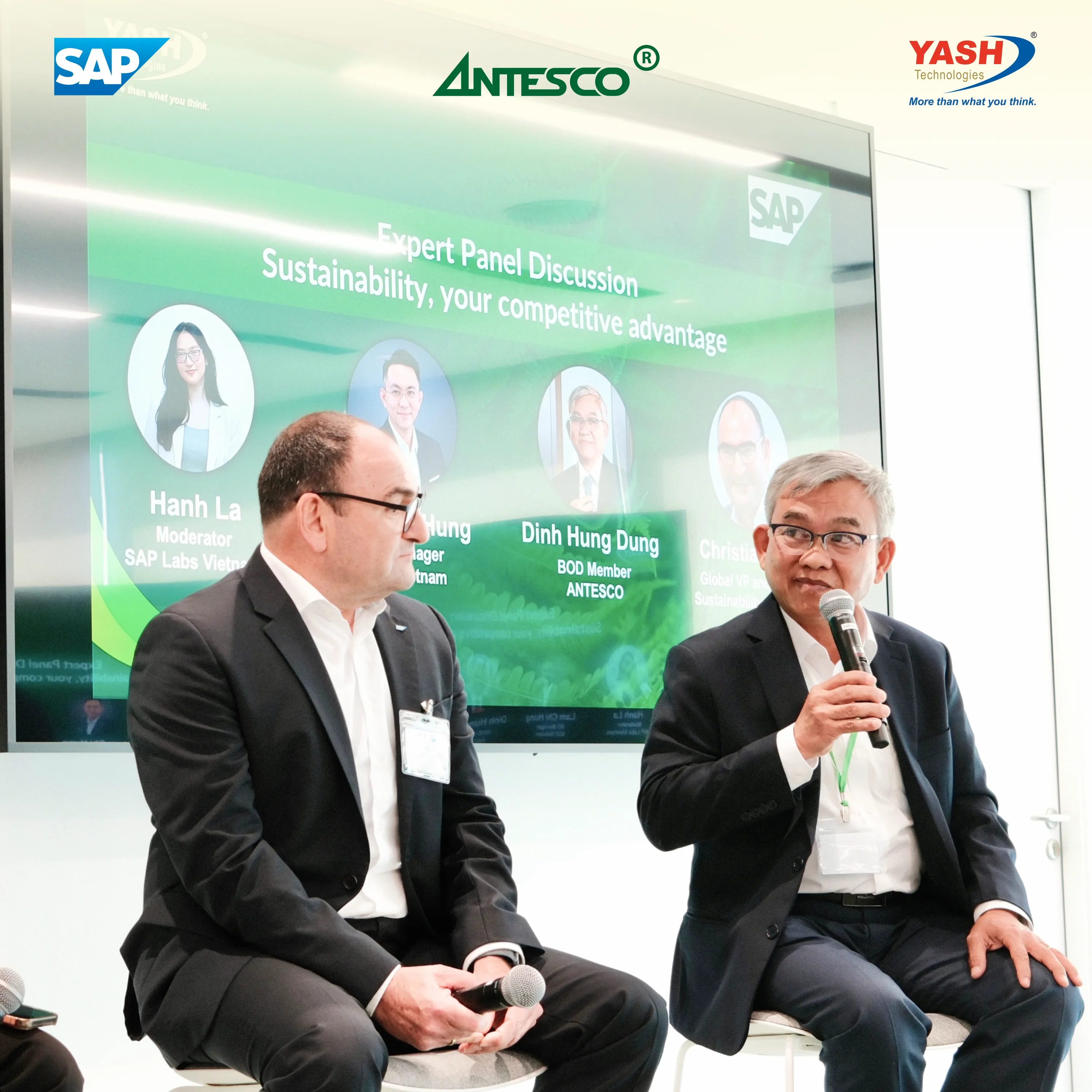
From direction to action: data as the starting point
As it implements SAP S/4HANA, ANTESCO’s top priority is to build a reliable data foundation and consistent ways of working, so that sustainability goals translate into concrete day-to-day decisions. The company is focusing on four areas:
- Standardizing processes and data end to end. From raw material purchasing and warehouse receiving to production, sales and finance, data is recorded consistently, can be reconciled and has clear ownership. S/4HANA serves as the core management system, and more specialized data on growing areas and the environment will be connected step by step.
- Improving traceability from raw material source to finished product. ANTESCO is standardizing supplier information, batch codes and quality records while progressively connecting growing-area data. The aim is to identify risks earlier, address issues more accurately and give customers clearer supporting evidence.
- Using data to manage resources and lower emissions. With data on energy, water, raw material losses, by-products and emissions per tonne of finished product, a company can see where losses occur, select suitable solutions, assess investment effectiveness and track results. It also provides a sound basis for an evidence-based emissions reduction roadmap.
- Linking workforce capability to accountability. For each material indicator, ANTESCO aims to define the responsible person, measurement method, source of evidence and person responsible for validation. Occupational safety, product quality and responsibilities toward suppliers are managed with the same implementation discipline.
The intended outcome is to give management a clearer view of the relationship between business performance, resource use and responsibility across the supply chain, so that decisions are better informed.
What it means for global customers: transparency for long-term partnership
The speakers shared one point: technology enables data management, but the credibility of the data still needs independent verification. ANTESCO’s approach of assigning accountability to every indicator, from the person who measures it to the person who validates it, follows that principle: data is only as valuable as it is verifiable.
For international customers, this is a practical commitment. ANTESCO is building the foundation to provide transparent, traceable and reliable information about its products and production processes, which strengthens trust and supports long-term cooperation.
The session closed with a message ANTESCO also pursues: transparency creates accountability, accountability drives action, and action creates competitive advantage.


